
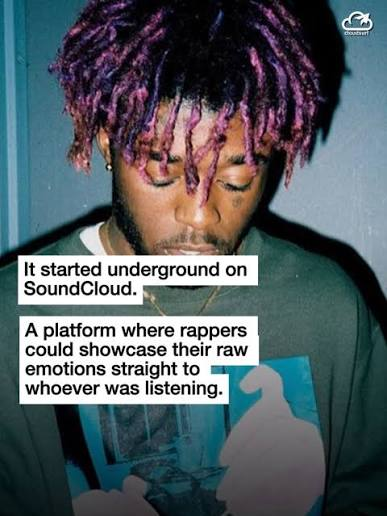
There was a window, roughly 2014 to 2018, when the most exciting music on earth was being made by teenagers with cheap microphones, stolen beats, and no intention of asking anyone’s permission. It had no city. No scene. No gatekeeper. It had a URL.
A genre that belonged to the internet, not a place
Every previous wave of hip-hop came somewhere from: the Bronx, Compton, Houston, Atlanta, Brooklyn. SoundCloud rap broke that rule. There were hubs in South Florida, New Orleans, Los Angeles, Long Island, Pittsburgh — but the actual home of the movement was a streaming platform founded in Sweden in 2007 25.
That mattered more than it sounds. Uploading to SoundCloud cost nothing and required no contract, so kids with zero industry connections could put a song in front of strangers at 2 a.m. and get an answer by morning 5. Amateur rappers worked with “a small laptop and a very cheap microphone” and virtually started from nothing 5.
“Naming a musical movement after a streaming service naturally leads to a question: What happens when those artists start getting most of their plays on other platforms?”2
The name was always a trap. But it captured something real: this was the first generation where the distribution method was the aesthetic.
The sound of not caring enough to polish it
Unmastered two-minute tracks with titles like “red drop shawty” became the coolest music online 2. Distorted 808s from producers like Ronny J, Smokeasac, and Rob Holladay sat underneath vocals that treated Auto-Tune as an expressive instrument rather than a corrective one 4. Lil Uzi Vert’s “XO Tour Llif3” — which hit number seven on the Hot 100 in 2017 — was famously produced in an Atlanta hotel room using a Beats Pill speaker and a laptop 3.
Three things changed permanently:
- Singing became mandatory. Pop-punk-influenced kids used melody as a primary tool, not a hook they broke out occasionally 2.
- Ad-libs became the main course. MadeinTYO says he was told to dial his background vocals back in traditional industry settings — which tells you everything about the collision happening 2.
- Vulnerability stopped being a liability. Lil Peep fused emo guitar with trap architecture; Juice WRLD turned melodic freestyling over brutal beats into an actual art form 4.
And there was range hiding under the caricature. Every raucous MC (Lil Pump, 6ix9ine) had a moody foil (Lil Peep, Wifisfuneral), plus genuinely great lyricists like Denzel Curry, Ski Mask the Slump God, and Robb Bank$ 2. PnB Rock’s street-R&B sounded closer to Fetty Wap’s Paterson than to his own peers 2.
The bill came due
It would be dishonest to write this as pure triumph. Rappers in the scene routinely reinforced misogyny in lyrics and downplayed sexual violence accusations 3. Personas were built on viral stunts and manufactured chaos because attention was the only currency available. By 2023 the era had “collapsed under its own weight,” having been strip-mined for content and then abandoned by the industry that profited from it 4.
And the human cost was catastrophic. Juice WRLD died in 2019 at 21. XXXTentacion was killed in 2018 at 20. Lil Peep died in 2017 at 21. Songs about Xanax and suicidal ideation weren’t a bit 3.
Why it still matters
SoundCloud rap proved the trunk-of-the-car economy could be replaced entirely by an upload button — a lineage running from mixtapes to blogs to SoundCloud to TikTok 2. The gatekeeping structures that decided what rap was “allowed” to sound like never fully reassembled.
So yes, calling it the last hurrah of millennial optimism is fair. It was a moment when the barrier to entry genuinely hit zero, and a bunch of kids with nothing proved the experts wrong about what a hit could be. Then the machine found them, monetized the pain, and moved on to the next feed.
The music won, though. Listen to any rapper under 25 and tell me otherwise.
Leave a Reply